




























Flowarts Teacher
Nick Woolsey
74
Lessons
5
Free Lessons
6
hours
Module 11
Lesson • Poi • Isolation • Wall Plane • Plane
Wall plane isolation yummyness
Two-poi wall plane isolations in front of the body, focusing on clean isolation points and tight planes. The lesson explores switching inside positions and playing with symmetry, overlaps, and apart-together spacing to create anti-gravity style visual illusions on the wall plane.
Lesson • Poi • Triquetra • Extension
Triquetra extension switchbacks
Poi pattern combining an upward-pointing triquetra in one hand with an arm extension in the other, switching back and forth in switchbacks. The hands stay close together as the triquetra and extension alternate while moving inwards.
Lesson • Poi • Time Flies
Time flies
Time Flies is a poi clockwork pattern, often shown on the wall plane, that creates a clock-like shape moving through the air. It combines a tick-tock rhythm with tri-kera-style positioning and drifting side to side as the hands cycle.
Lesson • Poi • Spiral Wrap
Infinite spiral wraps
Infinite spiral wraps for poi, using continuous spiral wrapping around the wrists. The pattern uses a clasped-hand position and a knuckle-led grip, creating a repeating wrap and unwrap that cycles smoothly without stopping.
Lesson • Poi • Behind The Back • Weave
How to get into backward behind the back weave
Review of several entries into a backward behind-the-back weave in poi, focusing on turning orientation and setting up the crossing over-under timing so the pattern can start cleanly behind the back.
Lesson • Poi • Behind The Back • Weave
How to get into forward behind the back weave
Review of how to enter a forward behind-the-back weave in poi. The lesson relates the behind-the-back weave timing to front weaves, highlighting the over/under pathway and how either hand can initiate the pattern for a clean setup.
Lesson • Poi • Body Bounce • Rhythm
The rhythm of body bounces
A poi lesson on body bounces, focusing on rhythm and timing while bouncing the poi off the body. It highlights counting patterns where downbeats land on numbers and upbeats land on “and” counts.
Module 12
Lesson • Poi • Stall-chaser • Stall
Stall-chasers
A poi lesson on the basic stall-chaser pattern, built from clean stalls on both sides. The movement focuses on extending the arms and keeping clear right angles between the arm and poi while slowing, following, and stopping into repeated stalls.
Lesson • Poi • Swoopty Swoop
Swoopty swoop conclusion
Conclusion of the Swoopty Swoop poi pattern, showing the final sequence and how it connects to the main lead-in. The movement combines alternating opposite-side timing with antispin and extension pathways to complete the swooping finish.
Lesson • Poi • Flower
Clover flowers
Clover flowers in poi, creating a clover-like pattern using anti-spin split-time opposite wall-plane flowers. The lesson focuses on keeping the hands vertically aligned and explores variations with the flowers inside the arms or with one poi in front of the arms.
Lesson • Poi • Waist Wrap
Waist wraps 3
Poi waist wrap pattern using front and back planes, circling around each hip in a steady two-beat wrap.
Lesson • Poi • Behind The Head • Spiral Wrap
Spiral wraps behind the head
Poi spiral wrap pattern performed behind the head, creating a behind-the-head halo-like spiral. The lesson focuses on moving spiral wraps from in front and above the head into position behind the head.
Module 13
Lesson • Poi • Time Flies
Cleaning up time flies part 1
A poi lesson on cleaning up the Time Flies pattern, combining a triquetra on one hand with an extension on the other. It focuses on clear timing between split-time opposite and split-time same-direction phases and keeping the lines smooth and consistent.
Lesson • Poi • Time Flies
Cleaning up time flies part 2
A poi lesson on cleaning up the Time Flies pattern by isolating key components, including triquetra-style hand motion and clear plane control. Focus is on keeping both arms moving together, maintaining extension, and creating a full, even path across the center.
Lesson • Poi • Antispin • Buzzsaw • Flower
Antispin buzzsaw flowers
Antispin buzzsaw flower patterns for poi, focusing on switching between forward and backward buzzsaw timing while maintaining antispin arm motion. The lesson centers on keeping clean circular arm paths as the poi reverse direction within the buzzsaw flower.
Lesson • Poi • 5 Beat • Weave
Mastering the 5-beat weave as example of needing to do lead-ups
A poi lesson on the 5-beat weave, using it as an example of why lead-ups matter for smooth, controlled patterns. Focuses on breaking the weave into simpler parts and building up to cleaner timing and wrap-around motion.
Lesson • Poi • Swoopty Swoop
Swoopty swoop variations
Poi lesson exploring variations on the Swoopty Swoop pattern, changing how the motion moves between caps and continuous flower tracking. It includes options like staying in the flower longer, switching inward and outward paths, and routing the pattern over the top or through the bottom.
Lesson • Poi • Plane • Stall
Stalls, plane changes, and performing in the round
An overview of poi stalls and plane changes, with a focus on adapting patterns for performing in the round. It connects controlling clean planes and using stalls as moments to reorient the poi so different audience angles can see the geometry.
Lesson • Poi • Shoulder Snake • Isolation
Isolations-and-shoulder-snakes
Shoulder snakes for poi, built from clean isolations. The pattern bends the plane as the hands come together in front and then move behind the shoulders, repeating in a smooth rhythm while maintaining symmetrical control.
Lesson • Poi • Behind The Back • Weave
Too fat for behind the back weave
Behind-the-back weave for poi, focusing on how body rotation can reduce the arm range needed. The lesson shows a behind-the-back weave approach that keeps the hands closer to the sternum, supporting dancers with limited flexibility or larger body size.
Lesson • Poi • Footwork
Jasons question about footwork
Turning-in-a-circle footwork for poi using a pivot-step pattern, focusing on shifting weight between feet during each pivot. The lesson highlights taking weight off the trailing foot so the lead foot can rotate and step smoothly in the direction of the turn.
Lesson • Poi • Antispin • Stall
Mastering antispin and stalls using targets
Poi practice focused on antispin patterns and controlled stalls, using a physical target for clear spatial reference. The lesson highlights placing antispin and up-stall movements into a three-dimensional target to refine accuracy and timing.
Lesson • Poi • Body tracing
More with body tracing
Poi body tracing variations that alternate between both arms, connecting traces across the armpit, torso, shoulder, and neck. The pattern is shown as an extension from a reverse archer weave, cycling through symmetrical circuits on each side of the body.
Extras 14
Lesson • Poi • Chase The Sun • Same Time • Turn
Adding an extended same-time turn to chase the sun
An extended same-time turn added to a poi Chase The Sun pattern, combining a full-body rotation with the arm path. The movement keeps both poi aligned as they travel up one side and down the other while turning.
Lesson • Poi • Opposite Direction
Arms opposites
Poi drill for circling the arms in opposite directions, with one arm forward and the other backward. Focus is on keeping each hand on a clear wall-plane track while coordinating both circles smoothly.
Lesson • Poi • Behind The Back • Weave
Behind the back weave leadups
Behind-the-back poi weave leadups, using behind-the-back crosses to set up the weave pattern. Focus is on keeping each poi on clear wheel-plane tracks while the body turns with the motion, moving smoothly from right-side to left-side behind the back.
Lesson • Poi • Switchy
Beyond switchy switchy
Switchy Switchy is a poi pattern in split-time, same-direction spins on the wall plane, alternating which poi crosses in front on each beat. The focus is on clean front-back switching, using either relaxed arm control or a body wobble to drive the changes.
Lesson • Poi • Chase The Sun
Chase the sun
Chase the Sun in poi, linking the hip reel and shoulder reel into one continuous pattern. The movement focuses on flipping the poi behind the hips and behind the shoulders while keeping feet planted and using a small, angled body turn.
Lesson • Poi • Antispin • 4 petal
Cleaning up 4-petal antispin
Focuses on making a poi 4-petal antispin flower cleaner and more symmetrical, with clear rhythm and distinct extension points. Emphasis is on keeping the pattern aligned to consistent cardinal directions so each petal and point reads clearly.
Lesson • Poi • Info
How do you learn to dance freely with poi?
An overview of how to dance and flow more freely with poi instead of repeating set patterns. The lesson focuses on connecting movement to music, exploring expressive body motion, and then adding poi with simple actions while keeping attention on overall dance and creativity.
Lesson • Poi • Body tracing
Introducing body tracing
An introduction to body tracing in poi, focusing on keeping the hands and poi close to the body. The lesson shows body tracing within an archer’s weave pattern, tracing along the arm between the wrist and shoulder while maintaining the weave.
Extras 15
Lesson • Poi • Info
Warming up with modes of movement 2
A poi warm-up focused on exploring different modes of movement, starting with full-body gentle motion and breathing. The sequence adds basic spins and turns while varying range, height, and direction, including same-time and split-time patterns and simple plane changes.
Lesson • Poi • Mode • Whirl
Introducing the goal of whirling with all the modes
An introduction to whirling in poi using multiple modes, focusing on maintaining clear arm planes while turning the body. The lesson frames consistent posture, spotting, and basic timing options like same-time and split-time during the whirl.
Lesson • Poi • Flower
Jakes video question about flowers
Poi flower patterns, focusing on making clear, consistent petals through smooth circular arm motion. The lesson references symmetry, cardinal point timing, and variations such as different petal counts while keeping the overall shape clean and even.
Lesson • Poi • Crosspoint
Jon talks crosspoints
Explores poi crosspoints in windmill-style milling patterns, focusing on how crosspoint location changes from above the head to shoulder level and down near the body. Shows how shifting body and arm timing relates to hitting one central crosspoint versus two opposing crosspoints.
Lesson • Poi • Behind The Back • Jiggy • Turn
More on jiggies behind the back and head - essential for turning freely
Behind-the-back jiggy variations for poi, focusing on turning with the poi staying behind you. The lesson connects this behind-the-back jiggy approach to freer turns and smoother entries into behind-the-back weaves and high turns.
Lesson • Poi • Antispin • 4 petal
More thoughts on making 4-petal antispin beautiful and safe
Antispin 4-petal poi flower with a focus on making the pattern smooth and safe, using arm circles, shoulder alignment, and relaxed body movement. The lesson highlights turning with the motion to avoid overreaching behind the body.
Lesson • Poi • Info
Playing freeze
A poi drilling game called “freeze,” where you pause briefly during weaves and cross-arm positions to check control of rhythm and plane alignment. The pattern repeats at chosen musical intervals, exploring different moments in a sequence and holding still before continuing.

Lesson • Poi • Reverse • Plane • Stall • Turn
Stall and reverse progression 3 - Turns between wheel planes
A poi progression combining stalls and reverses on wheel planes, adding turns between planes. The sequence alternates right and left reverses with stalls, then uses body turns to redirect both poi together while keeping track of their forward or backward rotation.

Lesson • Poi • Wall Plane • Reverse • Stall • Plane
Stall and reverse progression 4 - Playing on wall plane
Poi stall and reverse progression practised on the wall plane, alternating right and left stalls to switch directions. Includes working from both poi spinning forward into opposites and back, exploring inward and outward wall-plane spins in same time or split time.

Lesson • Poi • Wall Plane • Reverse • Stall • Turn • Plane
Stall and reverse progression 5 - Quarter turns between wheel and wall plane orientation
A poi stall and reverse progression using quarter turns to switch between wheel and wall plane orientations. Focuses on turning through 1/4 rotations while maintaining stalls and reverses as the movement changes plane.
Extras 16

Lesson • Poi • Poitruvian
Poitruvian arms
Poitruvian arms for poi, based on the Vitruvian-style arm path around the head and body. The lesson shows a full circular reach past the ear, overhead, and down past the legs, with attention to relaxed upright posture and shoulder alignment.

Lesson • Poi • Opposite Direction • Poi Fu
Poi fu arms opposites
Behind-the-back poi fu arm pattern with opposite-direction circles. The lesson focuses on switching between inside and outside arm circles while keeping the hands rolling smoothly, using a wall or partner as a reference to maintain clear direction behind the body.
Lesson • Poi • Poi Fu
Poi fu - Travel with partners
Partner Poi Fu travel patterns using synchronized footwork and turns while facing each other. The lesson shows traveling together in different directions with heel pivots and back-step turning, with simple partner timing and awareness cues like spotting and rhythm.

Lesson • Poi • Spiral Wrap
Spiral wraps 1
Spiral wraps for poi, focusing on keeping both poi close to the body by slightly bending the planes inward. The lesson outlines a split-time, same-direction setup and brings the hands closer together, with notes on hand position and how different grips affect the wrap.
Lesson • Poi • Split Time • Reel
Split time hip reels
Split time hip reels for poi, focusing on alternating hip-level reels and the hand path needed to keep smooth circles. The lesson connects split time timing with hip reels and emphasizes consistent thumb-in positioning as the poi pass front-to-back near the hips.

Lesson • Poi • Split Time
Split time sequence
A poi split-time sequence combining split-time same-direction patterns into a continuous progression, linking a forward weave start with openings, whirls, and in-spin elements before returning to the weave.

Lesson • Poi • One-Armed Practice
Suggestions for one-armed practice
Suggestions for poi one-armed practice, focusing on drilling the non-dominant side. The lesson highlights single-hand isolations and stalls, with attention to smooth control across different planes and directions.
Lesson • Poi • Plane • Turn
Turning with planes arms follow poi inside
Poi turning practice focused on maintaining clear planes while spinning, with the arms following the poi on inside pathways. The lesson explores coordinating turns with in-spin and anti-spin timing to keep the poi close and controlled during rotation.
Lesson • Poi • Flower
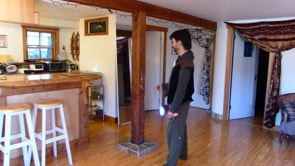
Using a beam or post or pole to work on flower petals
Using a fixed beam, post, or pole as a visual centerline, this poi lesson focuses on refining four-petal flower patterns. It highlights keeping top and bottom petals on clear cardinals and using the object to check alignment and accuracy, including clean stalls.